Lesson Nº3
Career Portrait.
Where do you actually stand in your career? An AI reads the whole thing and returns a portrait of that.
silent ink loop · 12s
- Door: First, understand.
- Designer directing the AI
- Next.js + TypeScript
- 2026
- Live at careerportrait.co
The blank page
I will be honest with you: I never wrote down the question that started this one. Of the lessons on this site it is the only one without an origin I can point to, and further down, in the crit, you will see what that cost. What I can tell you is what it does. Career Portrait reads a whole career and returns a portrait of where that person stands today. A CV forces you to see your work history one line at a time, written for a recruiter who will read it in thirty seconds. Almost nobody steps back and looks at the entire shape of what they have built. That step back is what I wanted the product to give people.
The studio wall
scroll sideways →
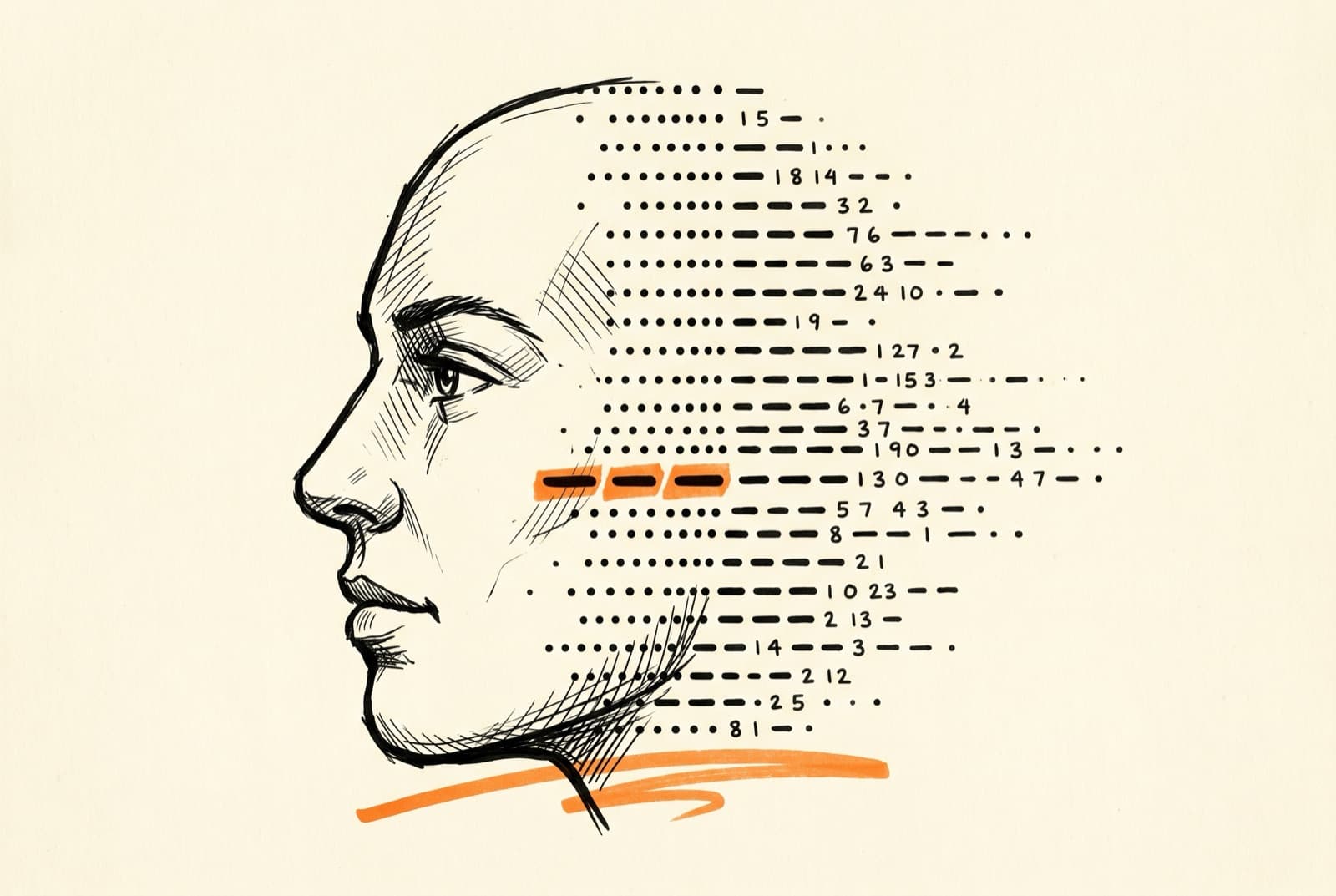
the keyframe, drawn before animating
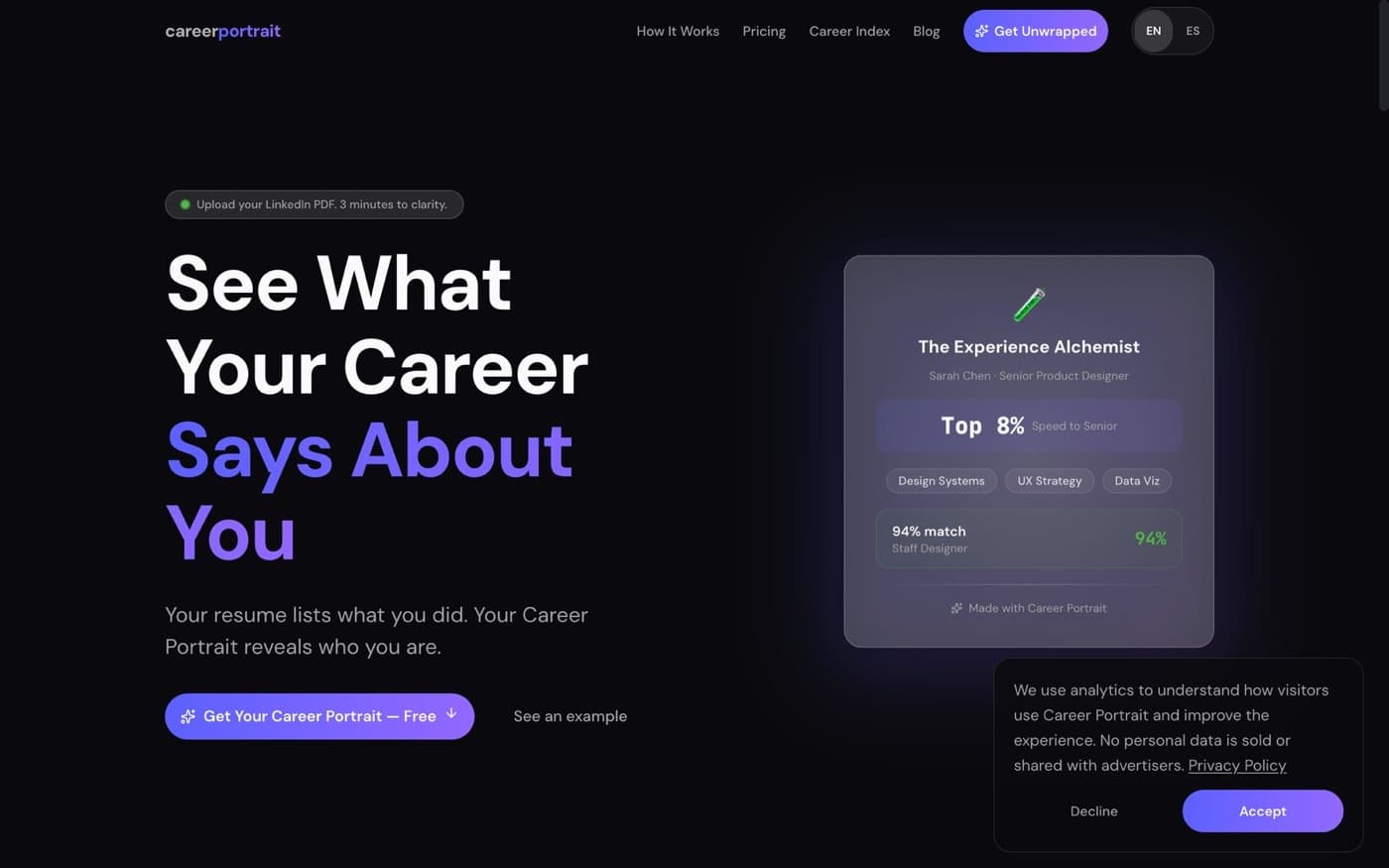
the product, as it shipped
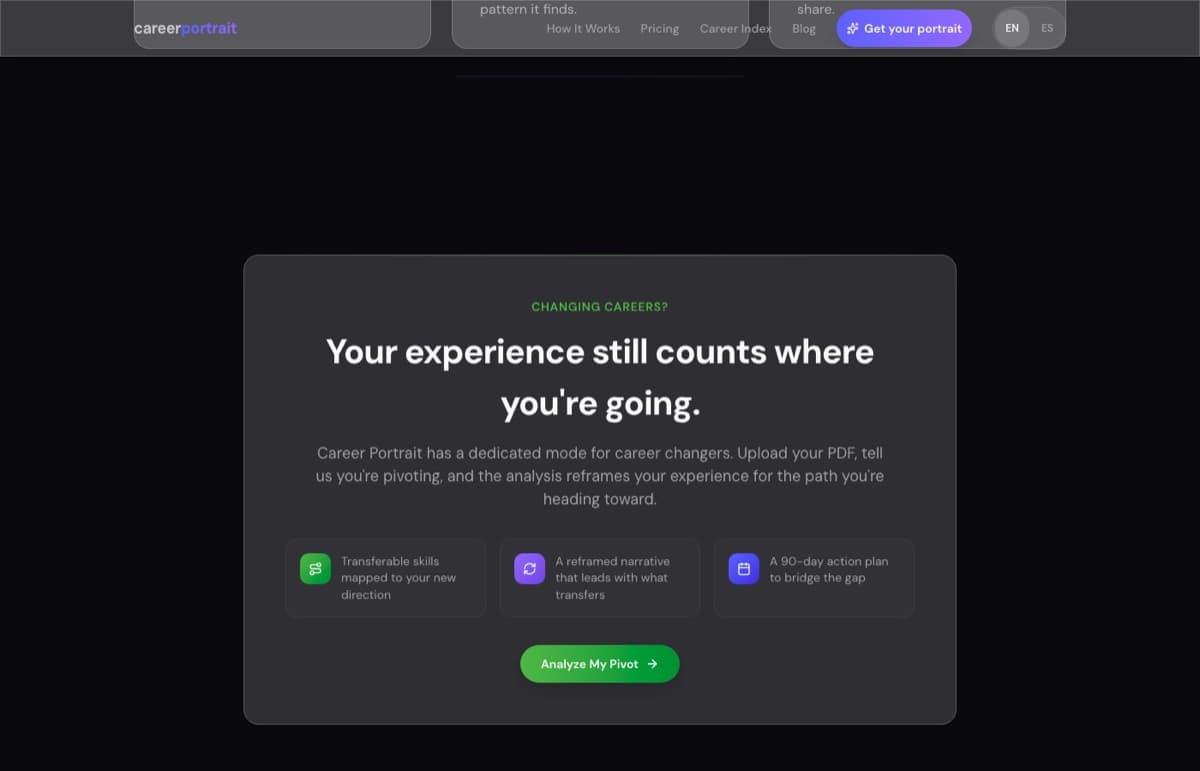
the career changer mode, live
Three honest weaknesses
The crit
The portrait is built from what you tell it about yourself. If you narrate your career badly, it reads a badly narrated career, and telling your own story well is partly the skill it is trying to assess.
It is long, because careers are long, and I have watched people skim exactly the paragraphs that took the most care to get right. I have not solved the reading problem yet.
It is shaped as a one-time experience. Once you have your portrait there is little reason to come back, and I designed that retention problem in myself.
Shipped & taught
- Shipped 2026
- Live at careerportrait.co
- Next.js + TypeScript
What this taught me
Now I write the question down before I write anything else. The cost of skipping that step appeared months later, as a product that works but does not know why you would come back. A skipped question gets more expensive the longer it waits.